
At Fengji Post Station: Another Farewell to Lord Yan
After accompanying you far, here we part;
The green mountains leave feeling unfulfilled.
When shall we lift our cups together again?
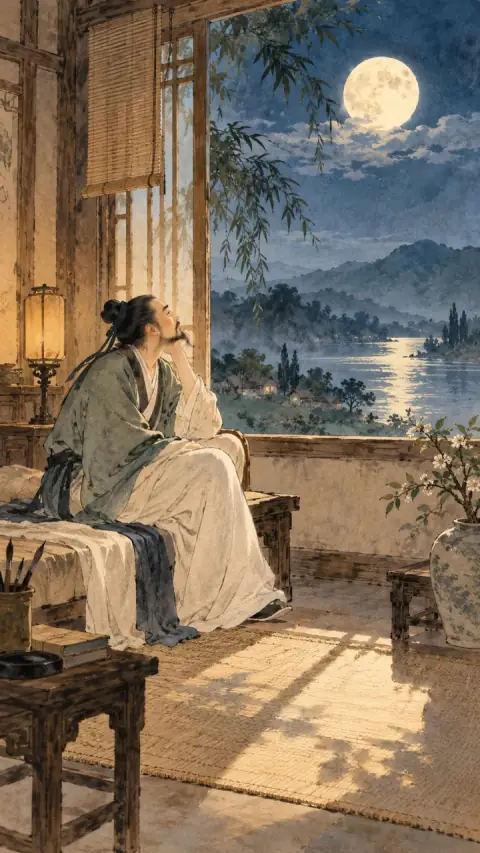
Last night the moon travelled with us.
The prefectures sing your praises and regret your departure;
Service through three reigns has brought you distinction.
I return alone to my riverside village,
To live out my remaining days in quiet solitude.
Notes
Fengji was a post station, with its precise location debated. Lord Yan refers to Yan Wu, a friend of Du Fu. The exact reference of the three reigns is discussed differently. The closing speaks of the speaker’s remaining life.
Meaning
The poet escorts Yan Wu, recalls travelling together under the moon, wonders about a reunion and returns alone to a riverside village.
Appreciation
The journey of accompanying a friend ends in a parting that is hard to accept.
Read the full appreciationCollapse
An uncertain future reunion is set beside last night’s shared moonlight.
The third couplet moves from personal feeling to others’ regard for the departing official.
The ending returns to the speaker’s solitary life in a riverside village.
About the poet
Du Fu (712–770), courtesy name Zimei, was a major Tang poet.
Read about the poetCollapse
His poetry records personal experience and the upheaval of his age, including the An Lushan rebellion.
He lived in Kuizhou in later years; his works include Spring View and Ascending the Heights.