
Golden Valley Garden
The splendours have scattered like fragrant dust;
Water flows on, indifferent, and grass turns green each spring.
At dusk, birds cry mournfully in the east wind;
Falling flowers still resemble the one who fell from the tower.
Notes
Golden Valley Garden was associated with the Western Jin figure Shi Chong. Fragrant dust suggests vanished luxury. Traditional readings identify the person who fell with Lü Zhu, although the poem itself does not name her.
Meaning
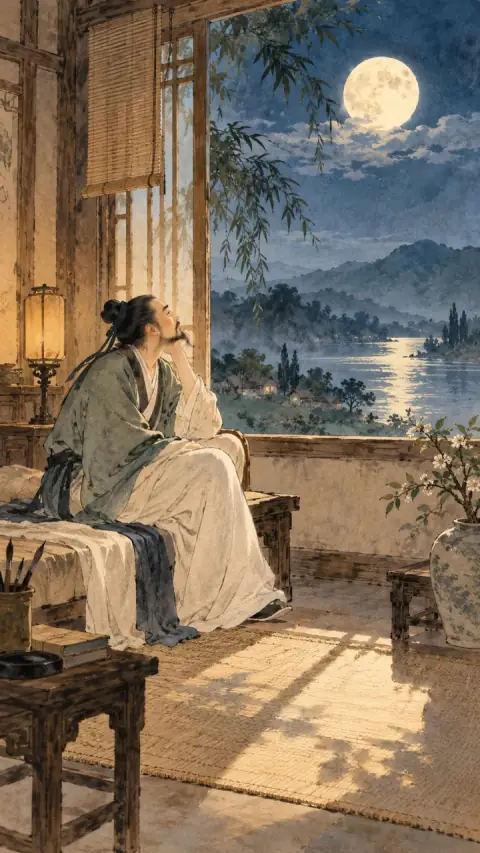
At an old garden, vanished luxury contrasts with continuing water and grass; falling flowers evoke a person who fell from a tower.
Appreciation
Fragrant dust gives vanished splendour a fleeting image.
Read the full appreciationCollapse
Water and spring grass continue, contrasting natural cycles with human change.
Birdsong and falling flowers lead the scene toward its closing historical association.
Traditional interpretations connect the final image with Lü Zhu; the poem itself leaves the person unnamed.
About the poet
Du Mu (803–852), courtesy name Muzhi, was a Tang poet and official from the area of present-day Xi’an. His works include Mountain Journey, Spring in Jiangnan and the prose-poem Efang Palace.
Read about the poetCollapse
Life: Du Mu held posts in the Yangzhou area and later served in regional offices, including Huangzhou and Chizhou.
Works: Alongside Qingming, his well-known writing includes Mountain Journey, Spring in Jiangnan and Efang Palace.