
Chang’e
Candle shadows deepen against a mica screen;
The Milky Way sinks, and the morning star descends.
Chang’e must regret taking the elixir in secret:
Under blue sky and over a blue sea, her heart keeps vigil each night.
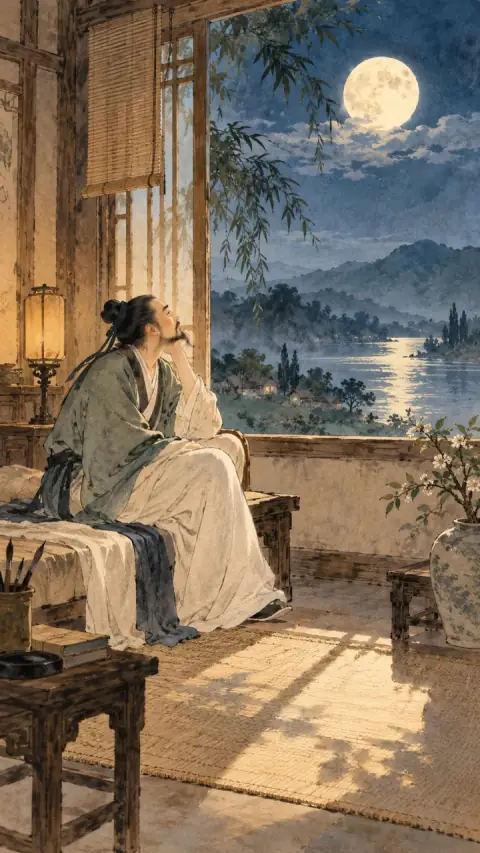
Notes
Mica is a shining mineral used to decorate a screen. The Long River is the Milky Way; the morning star appears near dawn. Chang’e is a figure in lunar legend, and the elixir promises immortality. “Must regret” is the speaker’s imagined feeling; the last line leaves her heart’s response partly unstated.
Meaning
As candle shadows deepen and stars sink toward dawn, the speaker imagines that Chang’e may regret taking the elixir and living beneath an immense blue sky.
Appreciation
The poem moves from candle shadows indoors to the sky, then imagines a feeling through the legend of Chang’e.
Read the full appreciationCollapse
The sinking Milky Way and morning star suggest that a night has passed.
“Must regret” is the speaker’s inference, not a statement by Chang’e; the closing phrase leaves her feelings open.
Interpretations differ. Share the legend, then compare the small indoor scene with the vast sky.
About the poet
Li Shangyin (c. 813–c. 858), courtesy name Yishan, was a late Tang poet. His family came from the area of present-day Qinyang, Henan; accounts of his dates differ.
Read about the poetCollapse
He served in regional offices and wrote works including The Patterned Zither and poems titled Untitled.
Readers differ on the addressee of Night Rain Sent North and the specific meaning of Chang’e.