
Longing: Darkly Drawn Brows
Brows drawn dark,
Brows drawn light;
Cloudlike hair falls loose about the robe,
As a remembered rain returns to Yangtai.
Mount Wu rises high,
Mount Wu sinks low;
In the evening rain the beloved does not return,
And one keeps watch alone in an empty room.
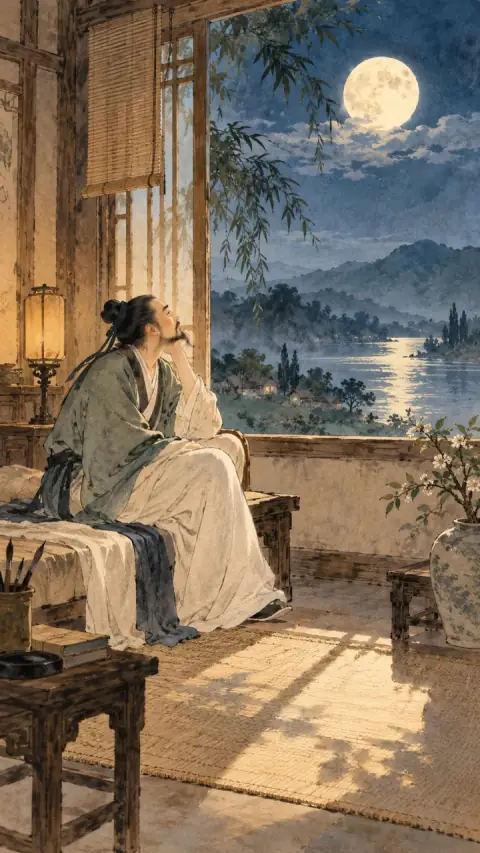
Notes
Attribution is disputed: some collections ascribe the lyric to Bai Juyi, while it also appears in a collected work of Ouyang Xiu and is elsewhere attributed to Wu Erniang. It is included here under the source collection, pending review. Chang Xiang Si is a tune pattern. “Cicada-wing” hair is fine hair at the temples; Yangtai rain alludes to the Mount Wu goddess legend.
Meaning
The lyric moves from drawn brows and loosened hair to a remembered or imagined meeting. Mount Wu and evening rain frame the loneliness of waiting for someone who has not returned.
Appreciation
The lyric moves from brows and hair to an allusion about Yangtai rain, then returns to a person waiting alone.
Read the full appreciationCollapse
Repeated dark and light brows give the opening a deliberate rhythm; cloudlike hair is a metaphor, not a literal cloud.
The second half shifts through high and low mountains and evening rain toward an absent beloved. The allusion suggests a story without recounting it in full.
Its authorship differs among historical collections; the attribution should be read alongside the sources.
About the poet
Historical sources differ on the author: the lyric is attributed to Bai Juyi in some sources, appears in a collected work of Ouyang Xiu and is attributed to Wu Erniang elsewhere. The source collection places it under Bai Juyi; attribution remains under review.
Read about the poetCollapse
Bai Juyi (772–846) was a Tang poet. This biographical context does not settle the authorship of this lyric.