
Flower, Yet Not a Flower
A flower, yet not a flower;
A mist, yet not a mist.
It comes at midnight,
And goes at dawn.
It comes like a spring dream—how long can it last?
It goes like morning clouds, nowhere to be found.
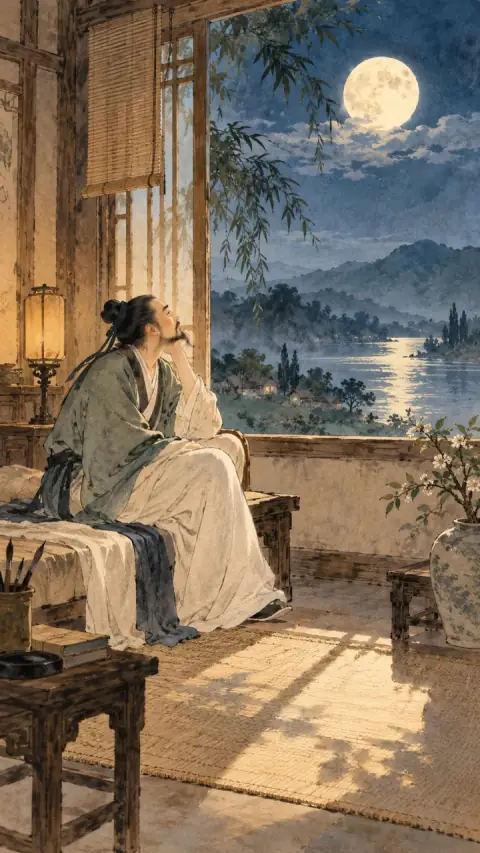
Notes
Fēi means “not.” Yèbàn is midnight and tiānmíng is dawn. A spring dream suggests something fleeting; zhāoyún means morning clouds. The poem does not name its subject, and readers have proposed different interpretations.
Meaning
Something seems like a flower and a mist, yet is neither. It comes at night and leaves at dawn, as brief as a dream and as hard to find as vanished morning cloud.
Appreciation
The poem leaves its subject unnamed and evokes something fleeting through flower, mist, dream and cloud.
Read the full appreciationCollapse
The opening says “not” twice: each image suggests a likeness without giving a definite answer.
Night and dawn mark a brief visit; dream and cloud make its disappearance vivid. The poem’s intended subject remains open to interpretation.
Read it as an invitation to imagine something that appears briefly and then cannot be found.
About the poet
Bai Juyi (772–846), courtesy name Letian, was a Tang poet and official born near present-day Xinzheng, Henan.
Read about the poetCollapse
His works include Song of the Pipa Player, Song of Everlasting Sorrow and many poems about daily life.