
Autumn Evening
Silver candlelight chills the painted screen in autumn;
A light silk fan reaches toward flying fireflies.
Night on the palace steps is cool as water;
Reclining, someone watches the Cowherd and Weaver stars.
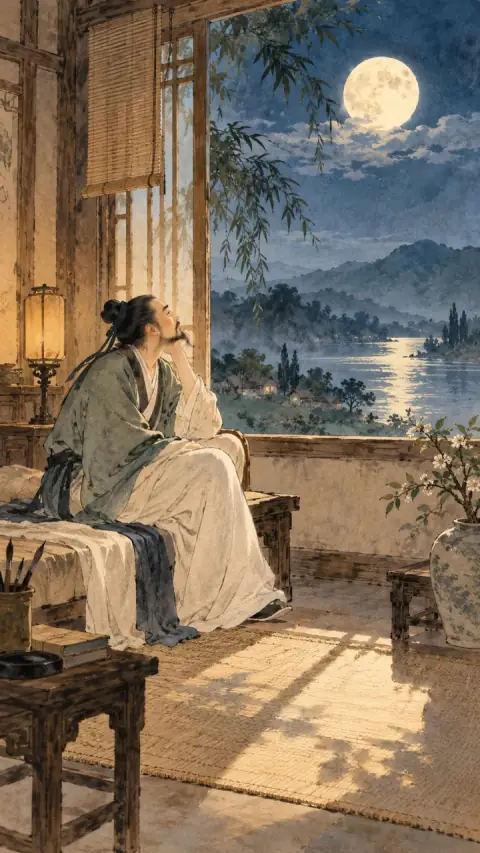
Notes
A painted screen and a light silk fan appear in the evening scene. Tiānjiē means outdoor steps. This version reads “reclining to look”; other versions read “sitting.” The Cowherd and Weaver are stars as well as figures in a familiar legend.
Meaning
In an autumn evening scene, someone catches at fireflies with a silk fan, then lies on cool outdoor steps looking at the Cowherd and Weaver stars.
Appreciation
Candlelight and fireflies lead from a close interior scene to stars above outdoor steps.
Read the full appreciationCollapse
The cool quality of the screen establishes an autumn mood.
Night feels as cool as water; the Cowherd and Weaver stars bring a familiar legend into view. The speaker’s identity is not explicit.
This page follows the source version with silver candle, outdoor steps and reclining; other editions differ.
About the poet
Du Mu (803–852), courtesy name Muzhi, was a Tang poet and official from the area of present-day Xi’an. His works include Mountain Journey, Spring in Jiangnan and the prose-poem Efang Palace.
Read about the poetCollapse
Life: Du Mu held posts in the Yangzhou area and later served in regional offices, including Huangzhou and Chizhou.
Works: Alongside Qingming, his well-known writing includes Mountain Journey, Spring in Jiangnan and Efang Palace.